All lessons in Workshop 2
Part 1: Getting started
Part 2: Potentiometers
Part 3: Push buttons
Part 4: Capacitors
- 5 Capacitors
- 5.1 Task 3: Capacitor circuit
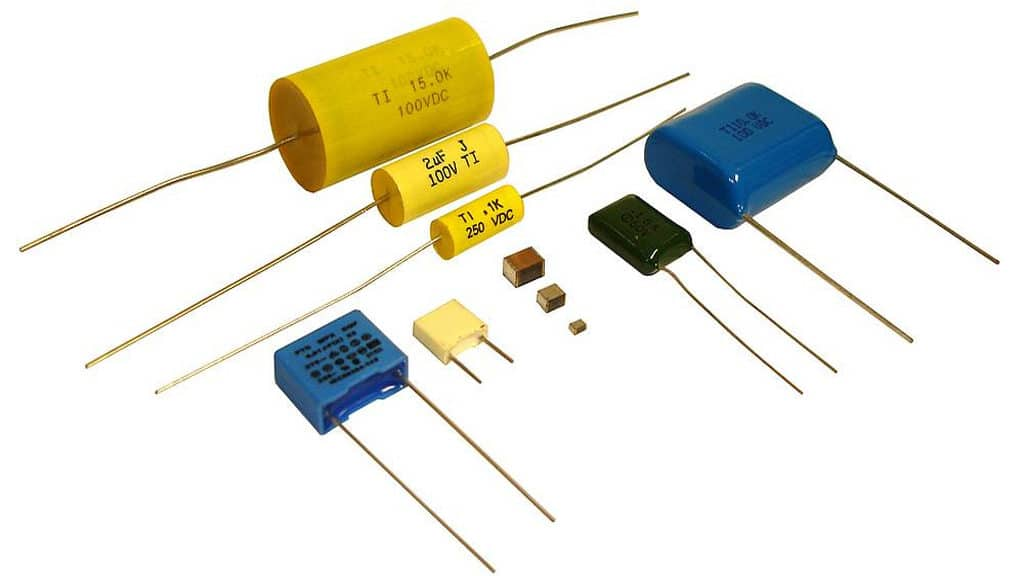
What is a capacitor?
A capacitor is a part that stores electrical energy, a bit like a battery. Inside, it has two metal plates with an insulator between them: a material that stops electricity from passing straight through.
Like a battery, but different
Unlike a battery, a capacitor can charge and discharge very quickly. It stores much less energy than a battery, but it can deliver that energy much faster.
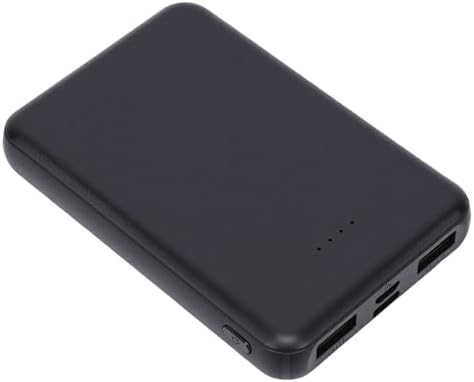
| Battery pack | Capacitor bank |
|---|---|
 |
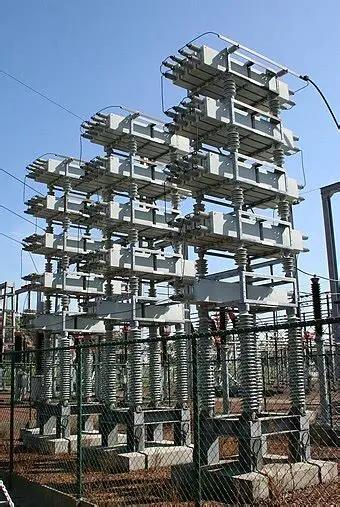 |
| Stores lots of energy and gives it out slowly and steadily. | Stores less energy, but delivers it quickly. Huge ones like this help keep the power grid steady. |
Because they react so fast, capacitors are used to give a circuit short-term backup power and to smooth out its voltage. Your circuits will use a much smaller capacitor, but the idea is the same.
Polarization
Some capacitors are polarized and some are not, depending on how they're made.
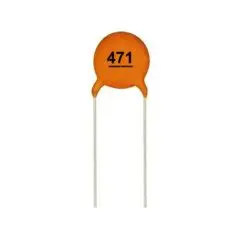
- Ceramic capacitors are not polarized. Like a resistor, they work in either direction.
- Aluminum electrolytic capacitors are polarized. Like an LED, they must be placed in the right direction.
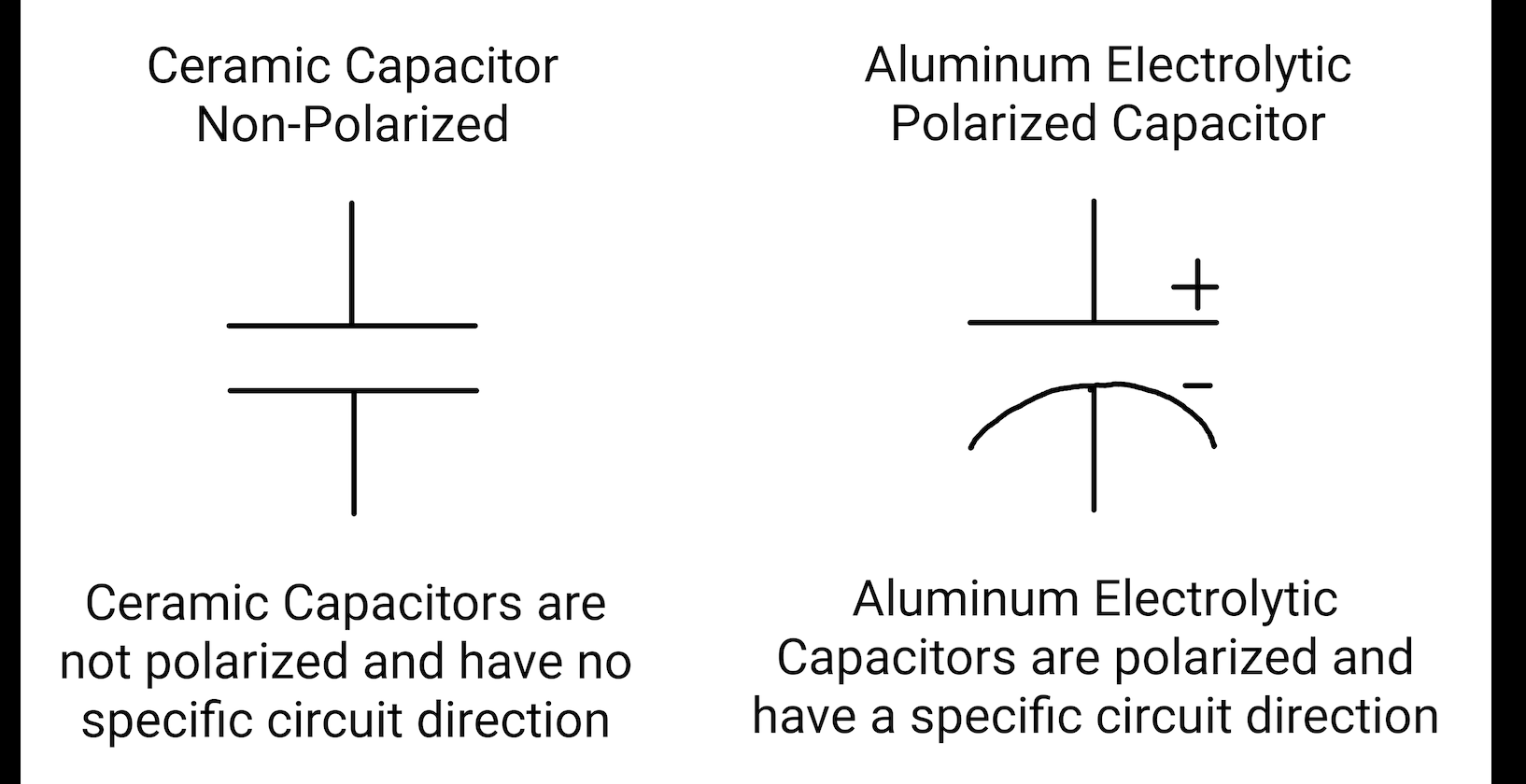
You'll use a ceramic capacitor in this workshop, so you don't need to worry about its direction.
Charging and discharging
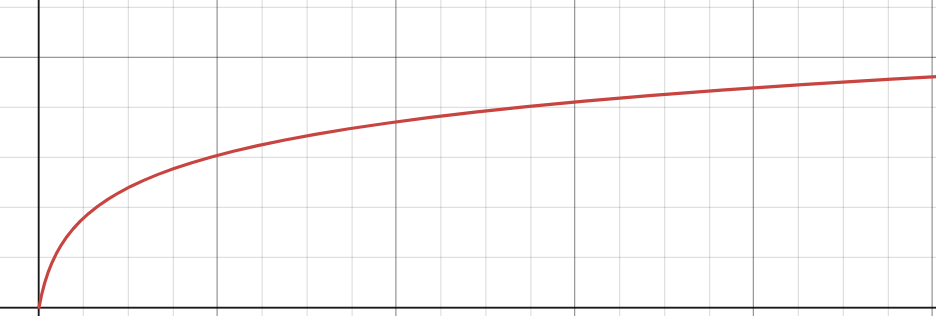
Charging: when a capacitor is connected to a power source, it fills up with energy until its voltage matches the power source. It charges quickly at first, then more and more slowly as it gets close to full.
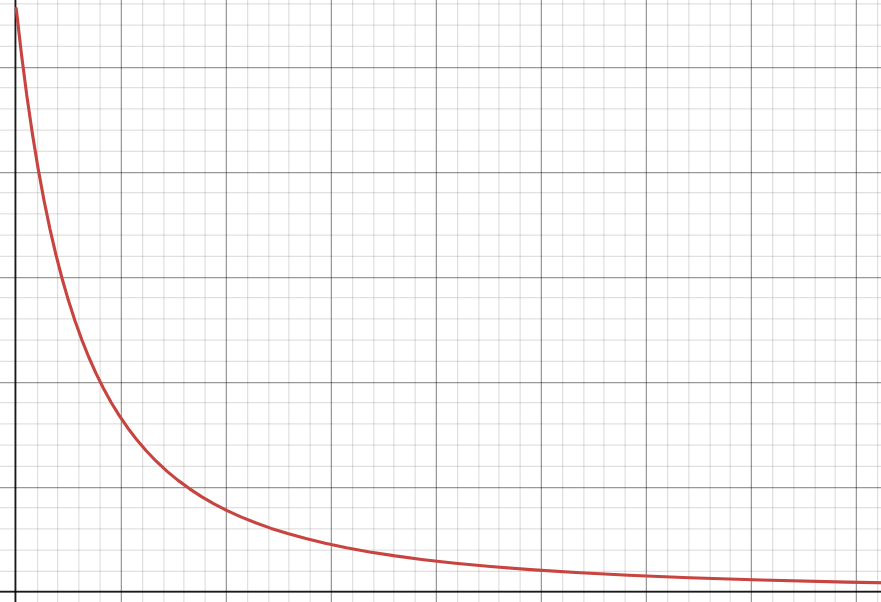
Discharging: when the power source is removed, the capacitor releases its stored energy, letting current flow through the rest of the circuit. Its voltage drops quickly at first, then more slowly.
Two ways to picture it
A pull-back toy car. Pulling the car back stores energy, like a capacitor charging. Letting go releases that energy and the car drives off, like a capacitor discharging. The farther you pull it back, the farther it goes.
A bucket in a river. Holding a bucket in the water slowly fills it, like a capacitor charging. When it's full, the capacitor is fully charged. Pouring the bucket out is like the capacitor discharging.