All lessons in Workshop 1
Part 1: Getting started
Part 2: Breadboards
- 2 Breadboarding basics
- 3 Open and closed circuits
- 3.1 Task 1: Closed circuit
Part 3: Ohm's Law
Part 4: LEDs and resistors
Part 5: Series and parallel
- 6 Series and parallel circuits
- 6.1 Tasks 3.1 and 3.2
- 6.2 Tasks 3.3 and 3.4
- 6.3 Task 4.1: Predict and observe
Part 6: Turn-on voltage
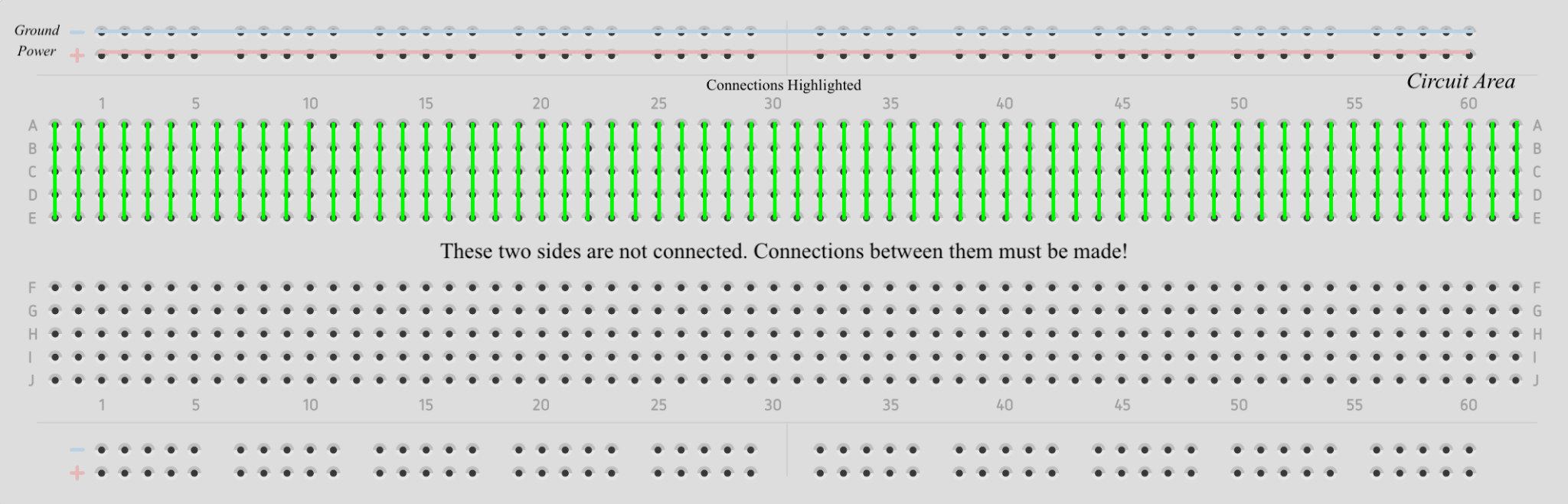
A Breadboard is a handy tool used to build and test electronic circuits. It's a great way to experiment with different circuit designs without any soldering.
A Breadboard has a grid of small holes where you can insert wires and electronic components. On the sides of the breadboard, you'll see long rows marked with (+) and (-) signs. These are called Power Rails, and they're where you connect the positive and negative ends of your power source. The power source is what provides electricity for the circuit.
The rest of the grid is called the Circuit Area. This part is divided into rows and columns. Each horizontal row (usually 5 holes) is electrically connected, so if you place components in the same row, they're connected to each other. The vertical columns along the Power Rails distribute power to different parts of your circuit.
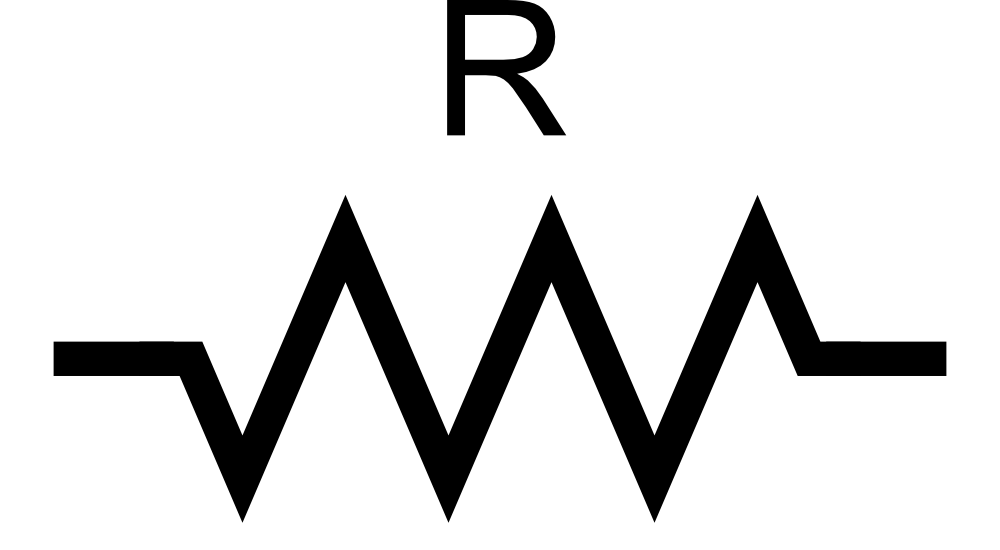
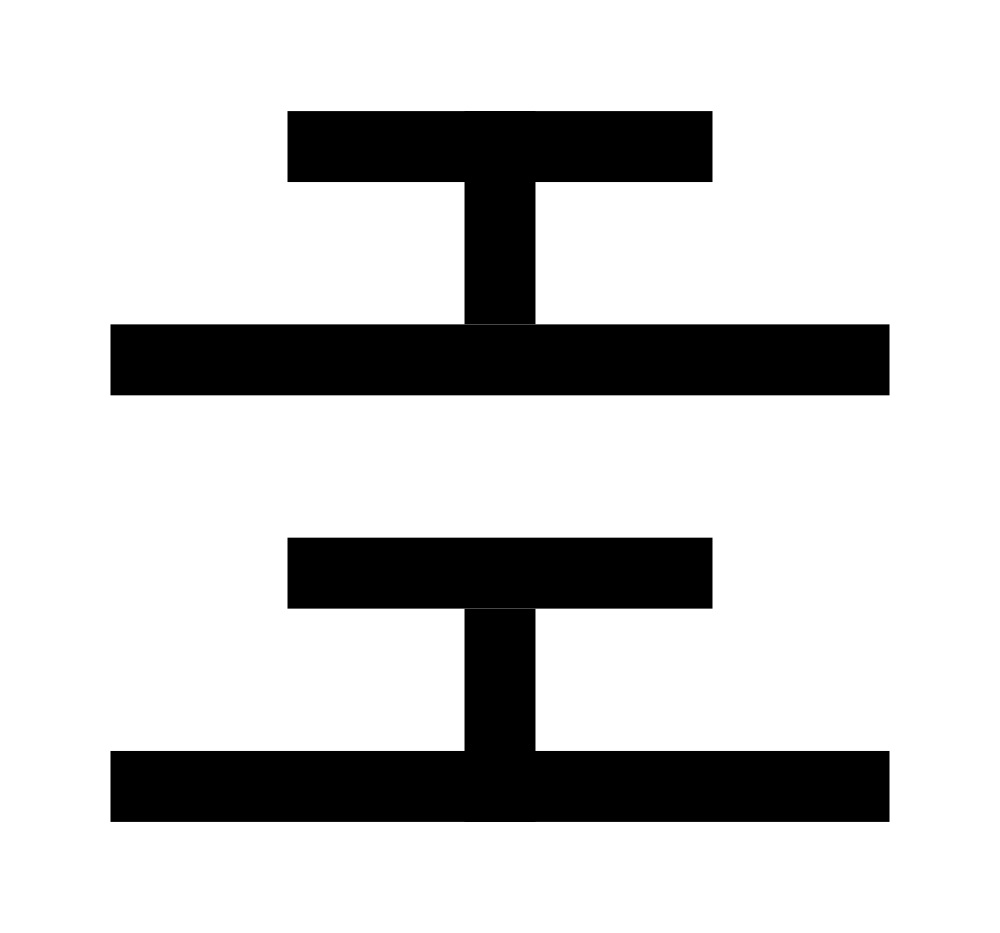
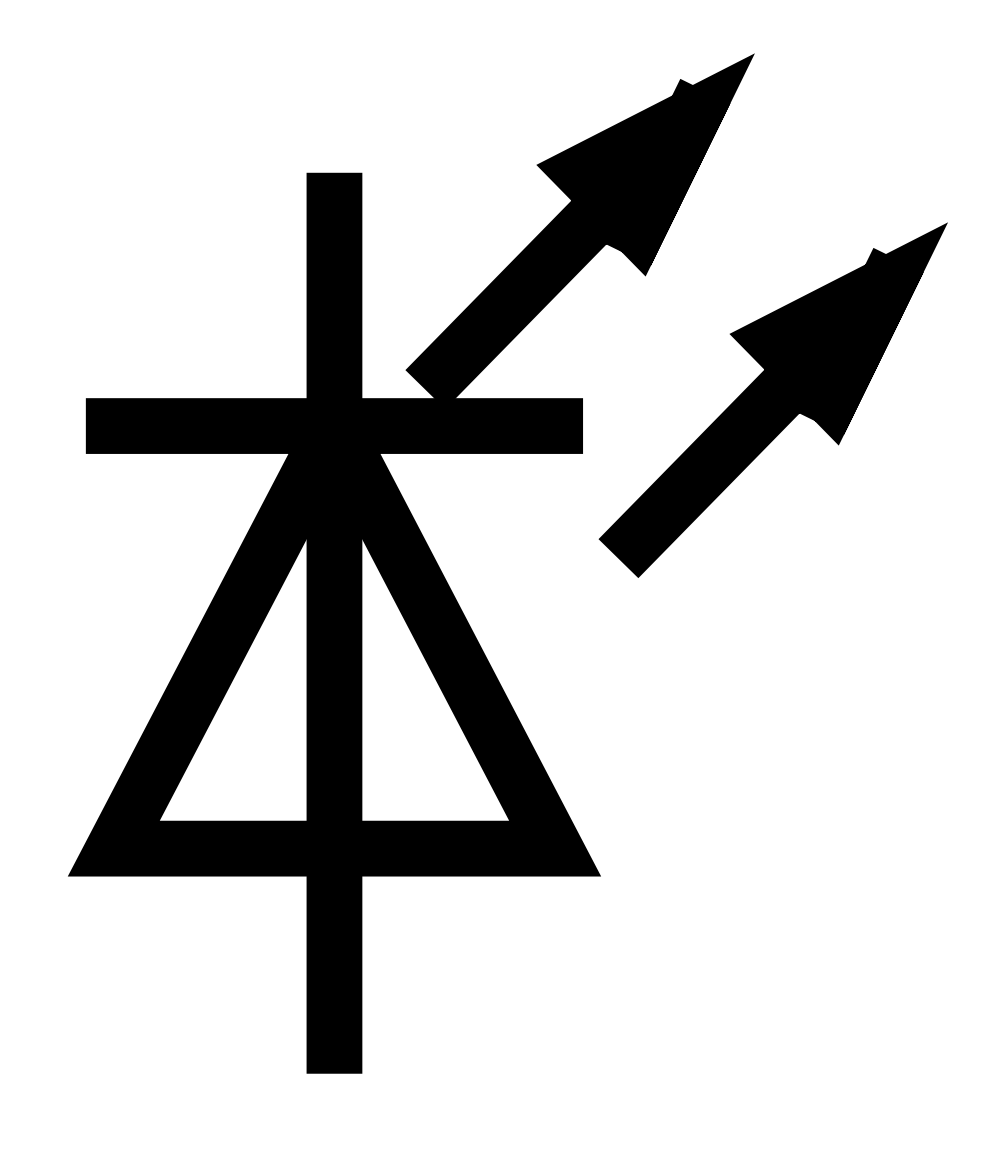
Circuit Elements are the individual components you connect together to build a circuit. There are dozens of different circuit elements; for each one used in this workshop, the table below shows its circuit symbol and its physical form.
| Symbol | Image | Title | Purpose |
|---|---|---|---|
 |
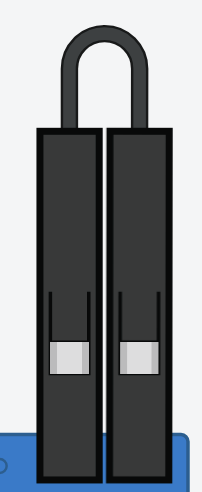 |
Wire (Jumper Wire) | Makes an electrical connection between two points. The color of the wire does not change its properties for this workshop. Wires are not polarized. |
 |
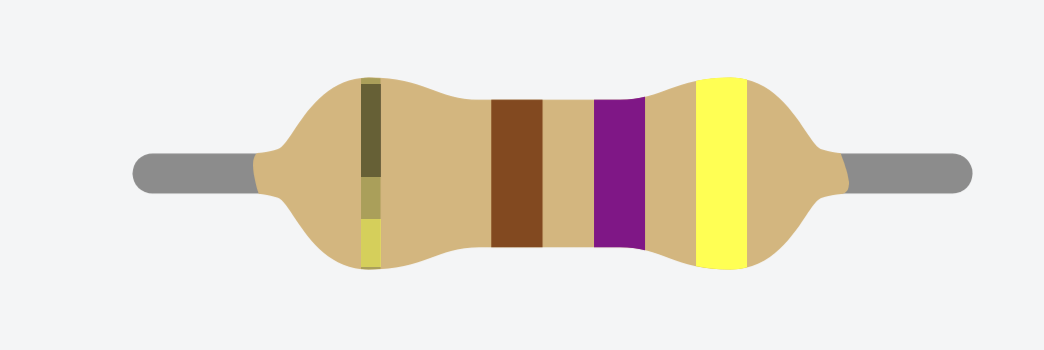 |
Resistor | A special type of wire that has a manufactured resistance. It decreases the current in a circuit, producing heat as a result. Resistors are not polarized. |
 |
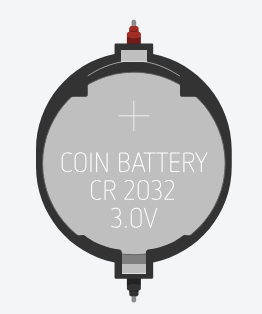 |
Power Source | Any source that can produce a voltage. In this workshop, you'll use two AA batteries in a holder (about 3 V). Power sources have polarity: current flows out of the positive terminal and back into the negative. |
 |
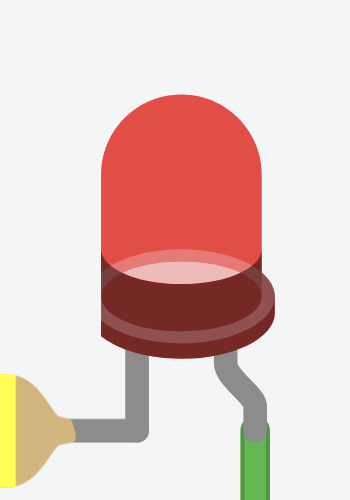 |
LED (Light Emitting Diode) | A special type of diode designed to produce light. A diode only allows current to flow in one direction. LEDs are polarized and MUST be placed correctly or they won't light up. LEDs always require a resistor in series. |
* Polarized means the circuit element must be placed in a specific direction to work correctly.