← Workshop 1 lessons
All lessons in Workshop 1
Part 1: Getting started
Part 2: Breadboards
- 2 Breadboarding basics
- 3 Open and closed circuits
- 3.1 Task 1: Closed circuit
Part 3: Ohm's Law
Part 4: LEDs and resistors
Part 5: Series and parallel
- 6 Series and parallel circuits
- 6.1 Tasks 3.1 and 3.2
- 6.2 Tasks 3.3 and 3.4
- 6.3 Task 4.1: Predict and observe
Part 6: Turn-on voltage
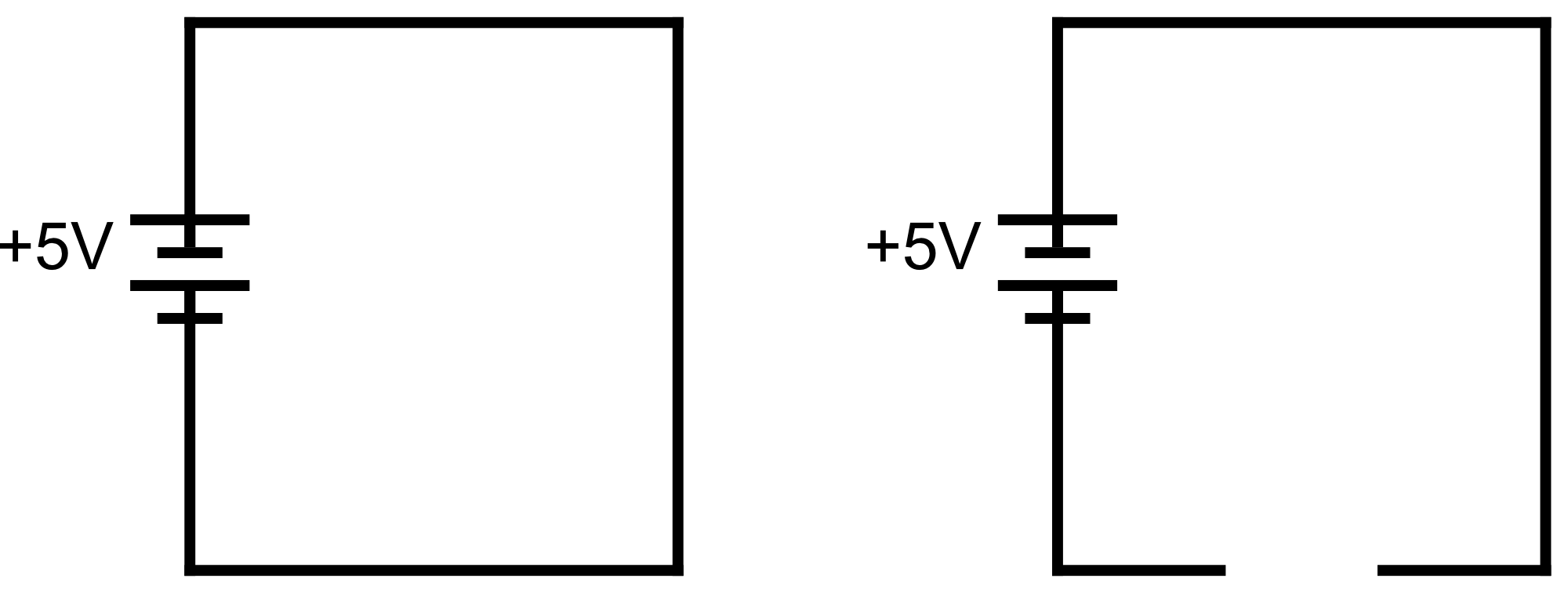
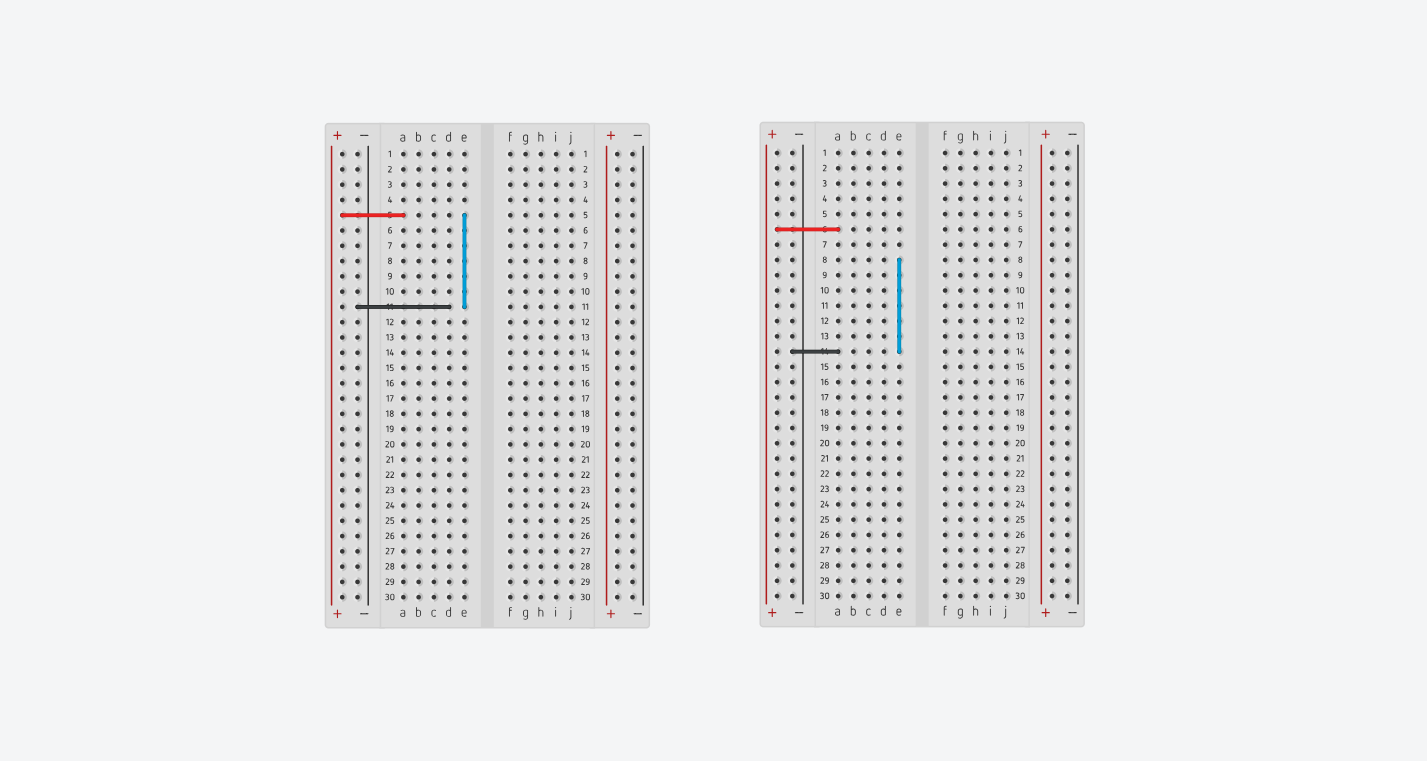
When you build a circuit on a breadboard, you're creating a path for electric current to flow. Current is the flow of electric charge through a circuit, usually measured in amperes (A). A circuit is closed when all parts are properly connected, allowing current to flow. A circuit is open when something isn't connected, and the current won't flow.
Breadboard: Closed (left) vs. Open (right):
Circuit Diagram: Closed (left) vs. Open (right):